


Aluminium door sealing in Dubai plays an important role in maintaining indoor comfort. When gaps develop around aluminium doors, warm outdoor air may enter while cooled indoor air escapes. As a result, your air conditioning system may need to work harder to maintain a comfortable temperature.
If you notice warm air near your balcony door, feel a draught around the frame or struggle to keep a room cool, your door may need attention. However, the problem does not always mean you need a complete replacement.
In this guide, we explain the common causes of air leakage around aluminium doors, what you can check and when professional inspection may help.
Why Is Aluminium Door Sealing Important for Indoor Cooling?
Your aluminium doors form part of your property’s barrier against outdoor conditions. When the panels close correctly and the seals fit properly, they help limit unwanted air movement.
However, regular use, damaged seals and installation issues can create openings around the door. Consequently, warm outdoor air may enter while cooled indoor air escapes.
In Dubai, where residents rely heavily on air conditioning, these problems can affect indoor comfort. You may notice that certain areas feel warmer than others or that your cooling system struggles to maintain a consistent temperature.
Proper aluminium door sealing can help reduce unwanted air movement. Nevertheless, the actual improvement depends on the condition of the door, the size of the gaps and other factors affecting the building.
Common Causes of Aluminium Door Sealing Problems
Before choosing a repair, identify where the air enters. Several parts of an aluminium door can contribute to the problem.
1. Worn or Damaged Rubber Seals
Rubber seals help close the contact points between the door panel and its frame. However, regular use and exposure to outdoor conditions can cause these seals to flatten, crack or loosen.
When the seals no longer fit properly, small openings may develop around the door.
Check the edges where the panel meets the frame. Look for damaged rubber, loose sections or visible gaps when the door is closed.
If you notice these signs, ask a professional to inspect the seals and determine whether they need adjustment or replacement.
2. Gaps Around the Aluminium Door Frame
Sometimes, air enters around the frame rather than through the moving door panels.
For example, damaged finishing or gaps where the frame meets the surrounding wall may create openings. These areas deserve attention, especially if you notice warm air near the edges of the door.
Inspect the visible joints around the frame. However, avoid applying sealant without identifying the source of the gap. The correct solution depends on the installation and the location of the opening.
3. Misaligned Sliding Aluminium Doors
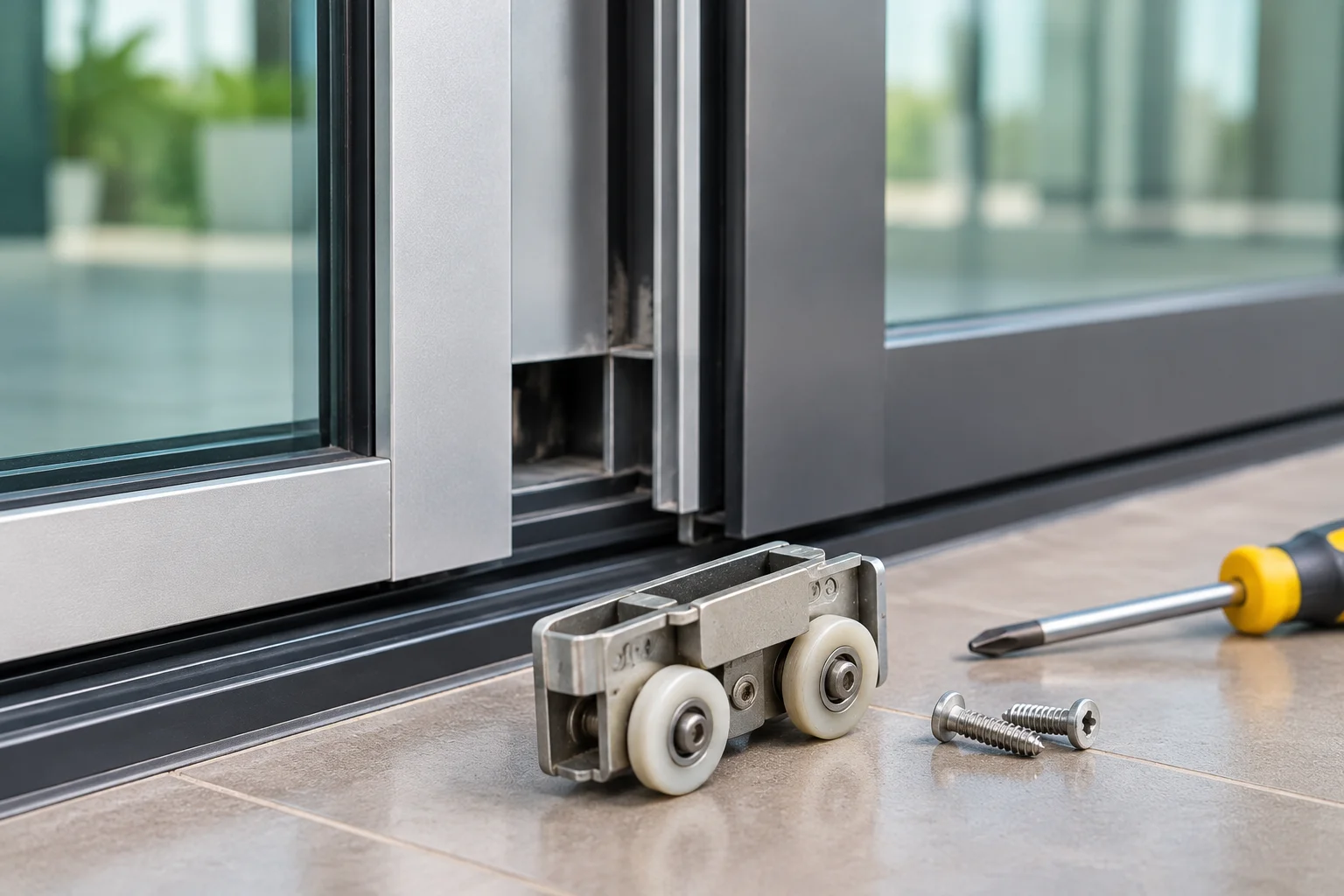
Sliding aluminium doors rely on properly aligned panels, rollers and tracks. If a panel shifts out of position, it may not meet the frame evenly.
As a result, the door may leave a small gap when closed.
You might also notice that the panel feels harder to slide or does not close smoothly. In this situation, the rollers, track and panel alignment may need professional attention.
Avoid forcing the door because this could cause further damage.
4. Damaged or Poorly Fitting Door Components
Door performance depends on more than the frame and rubber seals. Rollers, locking mechanisms and other components also help the panel close correctly.
If these parts wear out or stop working properly, the door may not sit tightly against the frame.
Therefore, inspect the way the door opens and closes. If you notice unusual movement, loose components or difficulty locking the door, arrange an inspection.
5. Problems With the Original Installation
An incorrectly fitted door may leave gaps around the frame or between the moving panels.
In some cases, the problem becomes noticeable only after regular use. For instance, a door may gradually become difficult to close or develop gaps that affect its performance.
A professional assessment can help identify whether the issue comes from the original installation, damaged components or normal wear.
How to Identify Aluminium Door Sealing Issues
You do not need specialised equipment to carry out a few basic checks. Start with a visual inspection and pay attention to how the door operates.
Look for Visible Gaps
Close the door and examine the edges where the panel meets the frame.
Check for uneven spacing, damaged seals or areas where the panel does not sit correctly. Also, inspect the joints around the frame.
Check the Rubber Seals
Run your eyes along the accessible rubber seals. Look for cracks, flattened sections or loose material.
If the seal has lost its shape, it may no longer provide proper contact between the panel and frame.
Notice Changes in Air Movement
Pay attention to areas near the door where you notice warm air or unusual draughts.
A professional can use suitable inspection methods to help identify the source. However, remember that other factors, including ventilation, building pressure and insulation, can also affect indoor temperature.
Check How the Door Closes
Open and close the door gently.
Does the panel move smoothly? Does it meet the frame evenly? Does the locking mechanism work correctly?
If you notice resistance or uneven movement, the door may need adjustment or maintenance.
How to Improve Aluminium Door Sealing in Dubai
Once you identify the likely cause, consider the following steps.
1. Replace Damaged Rubber Seals
If the existing rubber seals have cracked, flattened or come loose, a compatible replacement may help restore proper contact between the panel and frame.
However, not every seal suits every aluminium door system. Choose the correct profile and size to avoid problems with closing and locking.
2. Adjust Misaligned Sliding Panels
If your sliding door does not close evenly, the rollers or alignment may need attention.
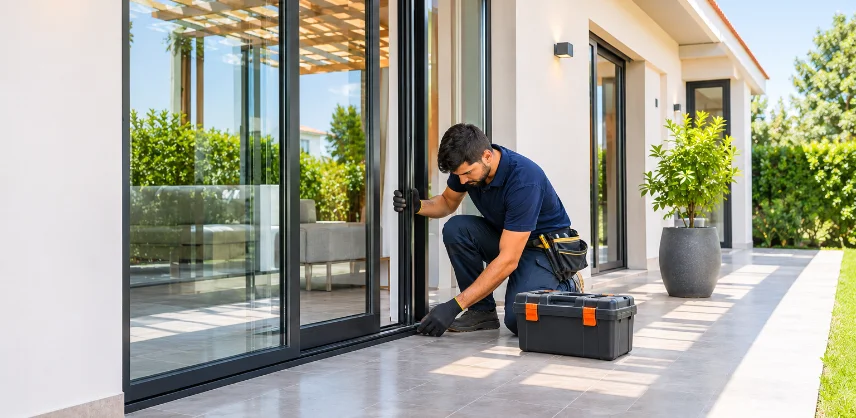
A professional can inspect the moving components and determine whether adjustment or replacement makes sense.
3. Address Gaps Around the Frame
If you find openings around the frame, first identify their cause.
Some gaps may need suitable sealing, while others may relate to the original installation or surrounding structure. Therefore, avoid applying products without checking the area properly.
4. Maintain the Sliding Door Track
Dust, sand and debris can collect inside sliding door tracks. Over time, this build-up may affect panel movement.
Clean the accessible track regularly using a soft brush or suitable vacuum attachment. In addition, follow the manufacturer’s maintenance instructions and avoid sharp tools that could damage the surface.
5. Consider a Replacement Door When Necessary
If the frame has significant damage or the existing system cannot meet your requirements, a replacement may be worth considering.
Before making that decision, compare the condition of the current door with the requirements of a new system. An inspection can help you understand which option makes more sense.
Can Door Sealing Help Keep Cool Air Inside?
Suitable weatherstripping and sealing around doors can help limit unwanted air movement. The Dubai Electricity and Water Authority (DEWA) also recommends weatherstripping and caulking around doors and windows where air leaks occur.
You can read its official cooling and energy-saving guidance for more ways to manage cooling at home.
However, sealing is only one part of indoor comfort. Air conditioning performance, windows, ventilation and the building’s overall condition can also affect room temperature.
Do DIY Door Sealing Strips Work?
Adhesive weatherstripping and foam strips may seem like an easy solution. However, they do not suit every aluminium door.
If a strip is too thick, it may prevent the panel from closing properly. Similarly, a product that does not match the frame can loosen or wear out with regular use.
DIY products may help with certain minor gaps, but they cannot correct misaligned panels, damaged rollers or problems with the original installation.
Therefore, identify the cause before purchasing replacement materials. This can help you avoid spending money on products that do not address the actual problem.
When Should You Call a Professional for Aluminium Door Sealing?
Basic cleaning and visual checks can help you spot potential problems. However, some issues require a professional who understands aluminium door systems.
Consider arranging an inspection if:
- You notice warm air entering around the door.
- The rubber seals look cracked, loose or flattened.
- The sliding panel does not close evenly.
- The door feels difficult to open or close.
- You notice visible gaps around the frame.
- DIY sealing strips have not solved the problem.
- Your door no longer locks or operates correctly.
A professional can examine the frame, seals, rollers and other accessible components. As a result, you can understand whether the door needs maintenance, adjustment, component replacement or a new installation.
Should You Repair or Replace Your Aluminium Door?
A complete replacement is not always necessary. Instead, consider the condition of the existing door.
Repair may be suitable when:
- The aluminium frame remains in good condition.
- The issue involves damaged rubber seals.
- The sliding panel needs adjustment.
- The track requires maintenance.
- You can replace the affected components.
Replacement may be worth considering when:
- The frame has significant damage or distortion.
- Several important components have deteriorated.
- The door has persistent operating problems.
- The existing system no longer meets your requirements.
Ultimately, the right decision depends on the condition of your current door and the work needed to restore its performance.