Sliding balcony door sealing helps reduce the amount of outdoor dust and sand that enters your home. In Dubai, wind can carry dust towards balcony doors, where it may collect around the frames, tracks and rubber seals. If your sliding door has worn weatherstripping, gaps around the frame or alignment problems, dust can easily find its way indoors.
Fortunately, you can check several parts of your sliding balcony door to identify the cause. In this guide, we explain what to look for, which maintenance steps can help and when you should arrange a professional inspection.
Why Sliding Balcony Door Sealing Matters in Dubai
Balcony doors connect your indoor space with the outdoors. When you close the door properly, its panels, seals and frame help limit the entry of dust, sand and outside air.
However, sliding doors contain moving parts and several contact points. Over time, regular use and outdoor conditions can wear down the seals. Meanwhile, dust can collect inside the tracks, and the panels may shift out of alignment. As a result, even a small gap can allow dust to enter your home.
Proper sliding balcony door sealing helps reduce these gaps and makes your living space easier to maintain. However, remember that no sliding door system can guarantee a completely dust-free home.
Common Causes of Poor Sliding Balcony Door Sealing
Before choosing a repair, first identify where the dust enters. The following areas deserve your attention.
1. Worn or Damaged Weather Seals
Weatherstripping and rubber seals help close the gaps between sliding panels and their frames. However, regular use and exposure to outdoor conditions can flatten, crack or loosen these materials.
First, inspect the edges where the sliding panel meets the fixed frame. Look for visible gaps, loose sections or rubber that no longer sits properly in place.
If you notice damage, ask a professional to check whether the seal needs replacement. Always choose a compatible seal because the wrong size or type can affect how the door closes and operates.
2. Gaps Around the Aluminium Door Frame
Dust may also enter around the edges of the door frame rather than between the sliding panels.
To check this, inspect the areas where the aluminium frame meets the surrounding wall or floor. Look for visible openings, damaged finishing or gaps around the frame.
However, do not apply sealant immediately. First, identify the source of the opening because the correct solution depends on its location and the way the installer fitted the frame.
3. Misaligned Sliding Door Panels
A sliding panel should sit correctly within its frame. However, regular use or problems with the rollers can affect its position. Consequently, the gap between the panels may become wider in certain areas.
You may notice that the door feels harder to slide, does not meet the frame evenly or leaves a visible gap when closed.
In this situation, a professional may need to inspect the panel alignment and rollers. Also, avoid forcing a door that feels stuck or unusually heavy, as this could cause further damage.
4. Dust and Sand Inside the Door Track
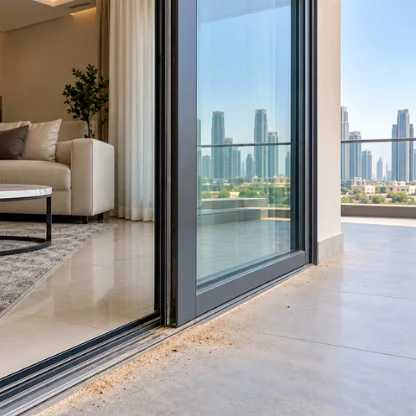
Sand and dust can build up inside the bottom track of a sliding balcony door. Over time, this debris may affect panel movement and prevent the door from closing smoothly.
Start by inspecting the track for accumulated dirt, stones or other obstructions. Then, clean the accessible areas carefully to remove loose debris.
Regular cleaning helps keep the track clear. In addition, it allows the sliding panel to move more freely.
How to Improve Sliding Balcony Door Sealing
After identifying the possible cause, consider these practical maintenance steps.
1. Clean the Sliding Door Track
First, remove loose dirt and sand with a suitable vacuum attachment or soft brush. Next, wipe the accessible surfaces with a suitable cleaning cloth.
However, always follow the door manufacturer’s care instructions. Avoid sharp tools because they can scratch or damage the track.
2. Inspect the Weatherstripping
Next, check the rubber seals along the sliding panel and frame. Look for cracks, loose sections or flattened material.
If you notice any damage, arrange an inspection to determine whether the seal needs replacement. Remember to choose a compatible replacement rather than fitting a seal simply because it looks similar.
3. Check How the Door Closes
Open and close the door gently. Pay attention to how smoothly the panel moves and whether it meets the frame evenly.
If the panel sticks, feels unusually heavy or refuses to close properly, the rollers, alignment or other components may need attention. In that case, avoid forcing the door and arrange a professional check.
4. Check the Frame Edges
Finally, inspect the perimeter of the frame for visible gaps or damaged finishing.
If you cannot identify the source, ask a professional to examine the frame and surrounding structure. This inspection can help determine whether the problem relates to the frame, installation or another component.
When to Call a Professional for Sliding Balcony Door Sealing
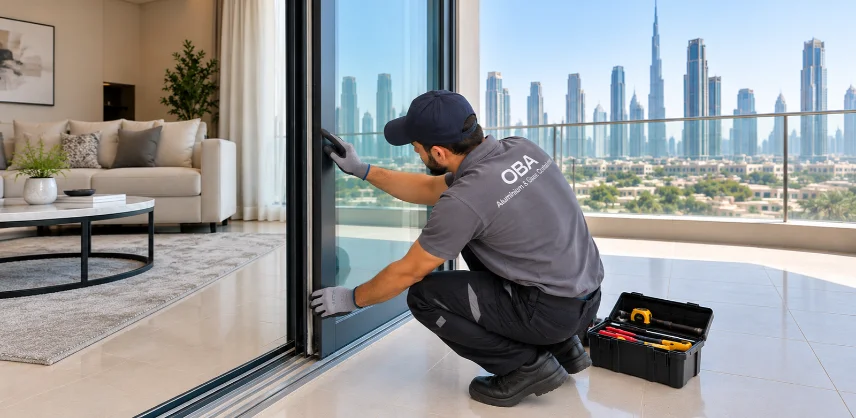
You can handle basic cleaning and visual checks at home. However, damaged seals, alignment problems and faulty components may require professional attention.
Consider arranging an inspection if:
- You notice cracked, loose or visibly damaged rubber seals.
- Dust continues to enter even after you clean the track.
- The sliding panel does not close evenly.
- The door feels difficult to open or close.
- You can see gaps around the frame.
- The door feels loose or its components appear damaged.
During an inspection, a professional can check the seals, frame, panel alignment and accessible hardware. As a result, you can identify the problem before replacing parts unnecessarily or attempting repairs that could affect the door’s operation.
Should You Repair or Replace Your Sliding Balcony Door?
You do not always need to replace the entire door. Instead, consider the condition of the existing system before making a decision.
A repair may be suitable when:
- The frame remains in good condition.
- The problem involves worn or damaged seals.
- The track needs cleaning or maintenance.
- The panel requires adjustment.
- You can replace the affected components.
You may need to consider replacement when:
- The frame has significant damage or distortion.
- Important components no longer support a practical repair.
- The door has persistent operating problems.
- The existing system no longer meets your requirements.
Ultimately, an inspection can help you decide whether a repair makes sense or whether a new sliding door system offers a better solution.